
One Vaccine Candidate Against Two Food-Borne Pathogens
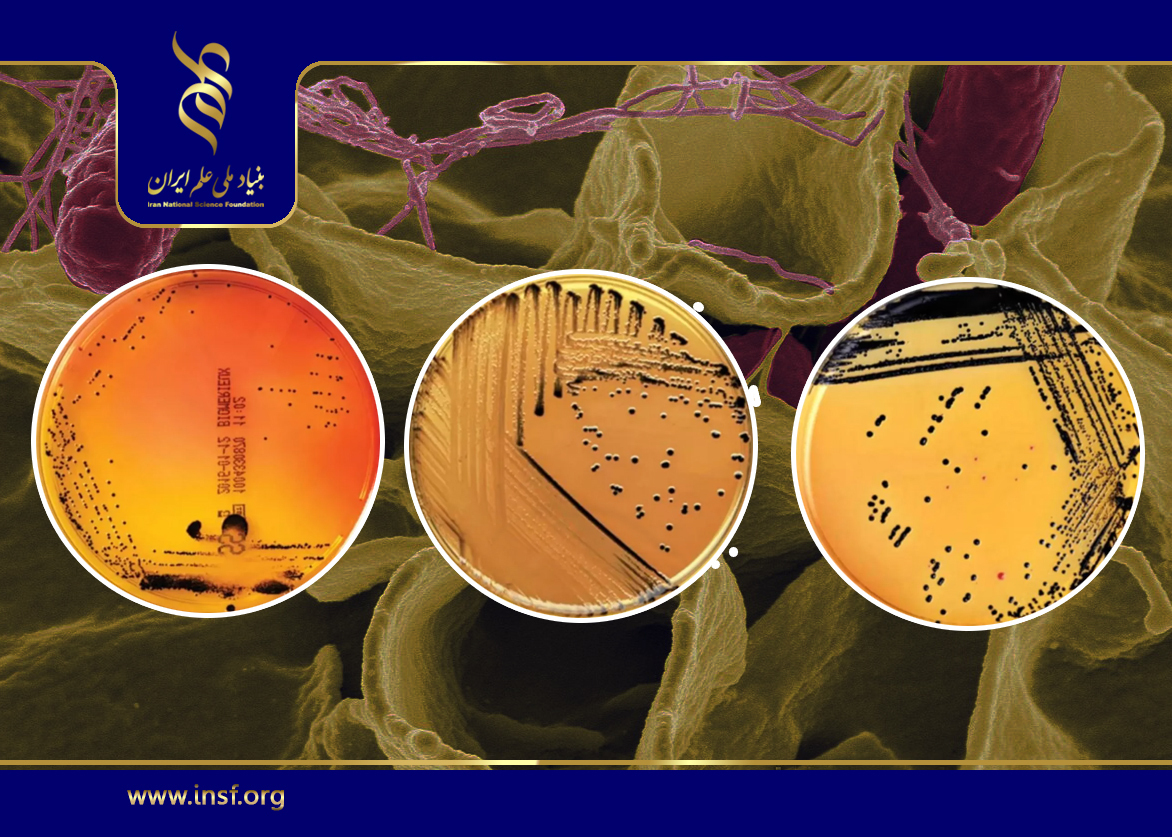
Food-borne infections remain a major public health burden worldwide. Two of the most important culprits are Salmonella and Shigella, bacteria that spread through contaminated food and water and cause abdominal pain, diarrhea and vomiting. Left untreated, they can lead to bloodstream infection and death, particularly in children and people with weakened immunity.
Prevention is difficult. There are more than 2,600 types of Salmonella and over 50 types of Shigella, and antibiotic-resistant strains are spreading, including in Iran. No licensed vaccine exists for either disease, and most candidates under development target only one bacterium or one type.
Postdoctoral researcher Dr. Elnaz Afshari, under the supervision of Professor Neda Soleimani of Shahid Beheshti University, Tehran, with funding from the Iran National Science Foundation (INSF) under its mission-oriented funding programs, set out to build one vaccine candidate that could protect against both pathogens.
The team first used computational tools to select short, highly immunogenic and well-conserved protein fragments, known as epitopes, from six proteins that the bacteria rely on to attach to host cells, invade them and survive: SpvB, SipD and RcK from Salmonella, and SigA, IpaD and FimA from Shigella. Only fragments predicted to be non-toxic and non-allergenic were kept.
These fragments were then built into the backbone of flagellin, the protein that forms the bacterial “tail”. Flagellin’s conserved ends activate an immune receptor called TLR5, so the protein also works as a built-in booster for the immune response. The resulting construct is called FMEC.
In the laboratory, the team produced the protein in E. coli, purified it, and loaded it into chitosan nanoparticles, tiny carriers about 157 nanometres in size. They then immunized mice with different formulations and, two weeks after the final dose, exposed them to lethal doses of Salmonella Typhimurium or Shigella flexneri.
Immunized mice developed high levels of antibodies against the vaccine protein, in both the bloodstream (IgG) and mucosal-type (IgA) classes. The pattern of antibody subtypes showed that the vaccine activated both antibody-based and cell-mediated immunity. The strongest response came from nanoparticles combined with Freund’s adjuvant, followed by protein with Freund’s adjuvant, and then nanoparticles alone.
The protection results were clear. All unvaccinated mice died within 48 hours of infection with either bacterium. All mice in the two adjuvanted groups survived, and the group that received nanoparticles alone was also substantially protected. Immunized mice carried far fewer bacteria in their blood, and cultures of the spleen showed complete clearance of both Salmonella and Shigella.
Together, these findings show that a single protein can protect mice against two very different pathogens, and point toward a future bivalent vaccine for food-borne disease. The work is at the preclinical stage. Further studies will be needed on safety, other routes of administration and adjuvants, and protection against a wider range of strains before the candidate could move toward human use.
The research resulted in a scientific article, “Innovative multi-epitope vaccine engineering for dual protection against Salmonella and Shigella leveraging FliC flagellin protein adjuvant properties: an immunoinformatics-based approach”, published in the Journal of Translational Medicine (2026).
 Soroush